
Last month, I watched Christopher Nolan’s highly publicized film The Odyssey at the historic Alcazar Cinema in Tangier. It was probably the first time in my life that I actually saw a film with Arabic subtitles. What struck me the most was the translation of the word “gods” into jababira (a term that has a range of meanings, including mighty and tyrants), which clearly is a deliberate attempt to disparage the pre-Abrahamic cultures of the ancient world. The meaning of the story, which takes place in a world teeming with all kinds of gods and demigods, is distorted for the viewers to protect their faith, I assume. It was clearly taboo to call ancient gods by their proper names, since Islam is based on the repudiation of human-made gods as false.
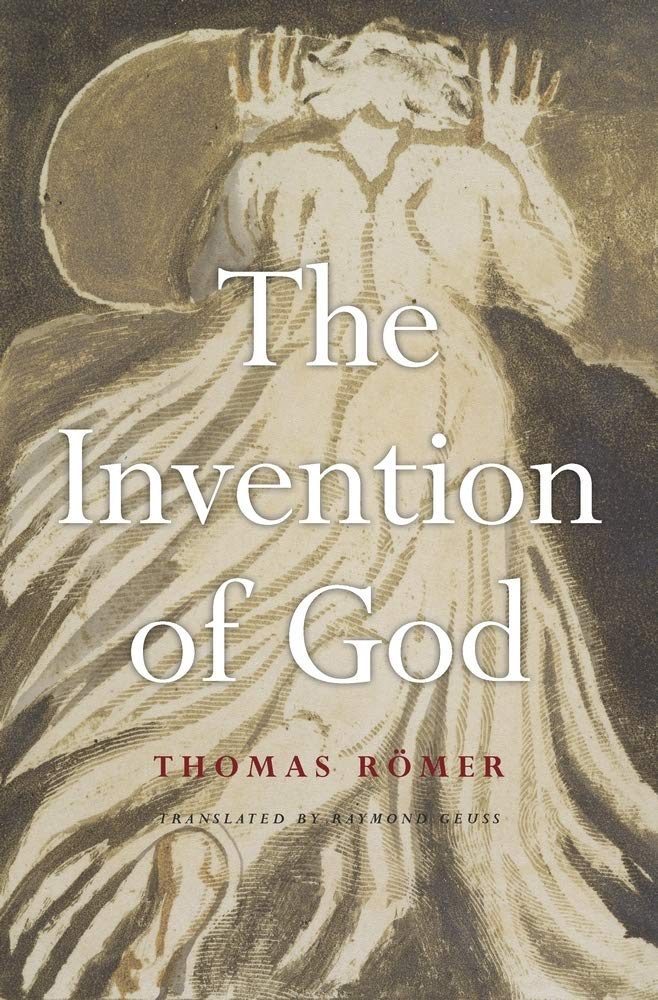
Yet the god Jews, Christians, and Muslims worship today is no different from the gods of antiquity; he was just transformed into a jealous god who won’t countenance any competition. He is a super god, if you will, but one made by humans nonetheless. One of the great studies tracing the making of this all-powerful god is Thomas Römer’s The Invention of God, initially published in French as L’Invention de Dieu in 2014 and translated by Harvard University Press a year later.
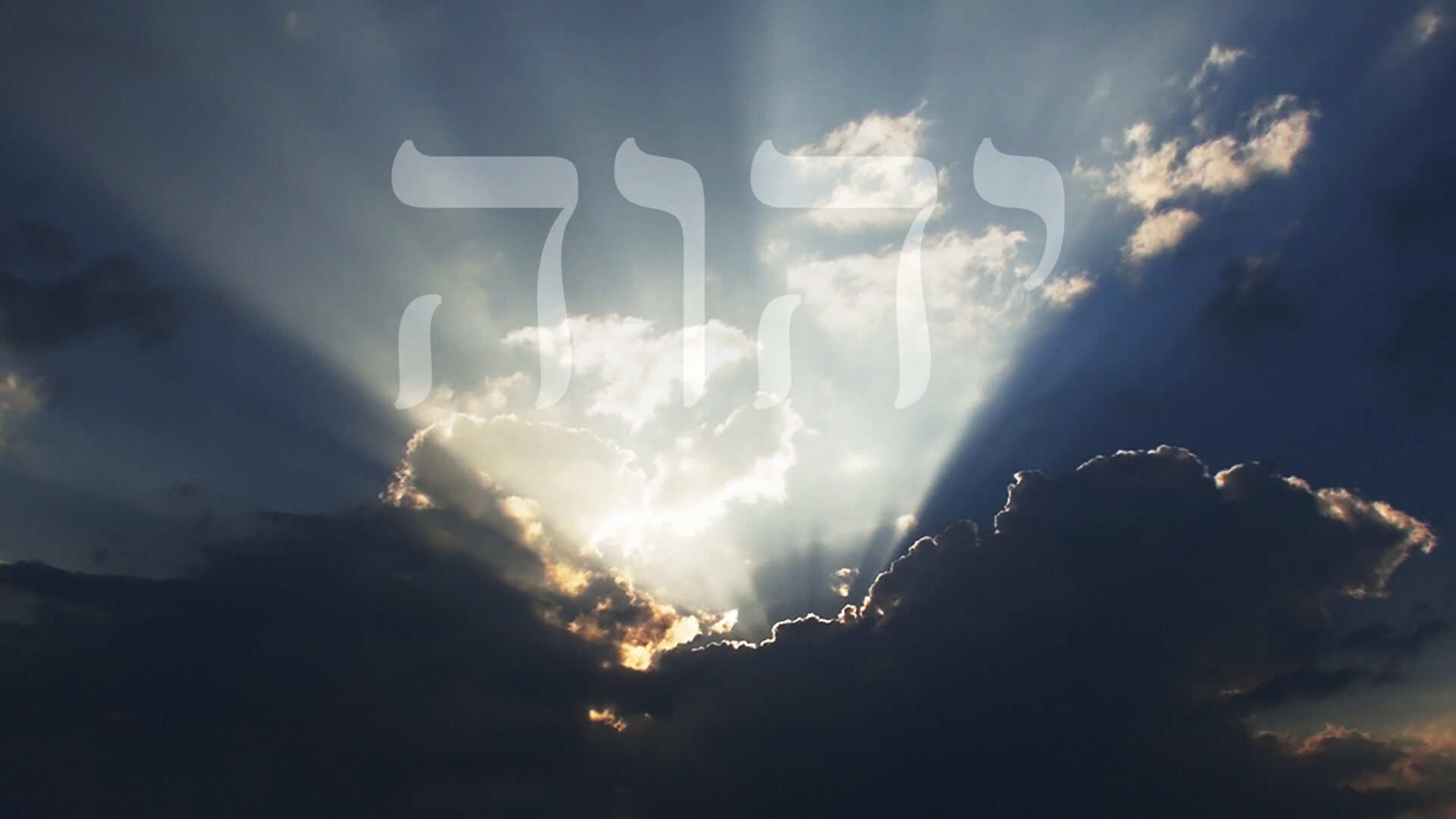
According to Jewish scripture (Torah, Nevi’im and Ketuvim), Yhwh first appeared to Moses as a warrior god who brought winds and storms in an area called Midian, somewhere between the Negev and Egypt. Meaning “he who blows,” Yhwh reflects the god’s origins in the desert and was not among the gods found in the Levant, as Römer’s careful study shows. He originated outside the land of Israel. To avoid calling him by name, observant Jews chose terms such as adonay or Elohim.
According to the book of Exodus, Moses kills an Egyptian overseer, escapes to Midian, works as a shepherd for a priest named Jethro (who goes by other names in the Bible), and marries his daughter Zipporah. When he reaches “the mountain of God” (Mount Sinai), Yhwh reveals himself to him and orders him to return to Egypt because his enemies are dead. Moses then returns in the company of his brother Aaron. When the Israelites were safely out of reach of the Egyptians, God tells them, “I am Yhwh, your god, who brought you out of the land of Egypt, from the home of the slaves.” Since Yhwh chose to be their god, Israelites were bound to him by a “covenant” forged with the sprinkling of blood.
Many Hebrews had worshipped the main god of the Near East, El, because the Bible suggests the Hebrews became ‘am Yhwh following their escape from Egypt and their encounter with Yhwh at Mount Sinai. The legacy of El has survived in a long list of names, includingf Israel, a term that appeared around 1210 BC; Ishmael (“May El hear); or Bethel (House of El). Yhwh was, therefore, a rather late arrival to Jerusalem, where the two “tablets of the law” given to Moses were kept in a box known as the Ark of the Covenant in Beth-Shamesh, the temple of the sun god. It was King David’s son, Solomon, who built (or renovated) the existing temple to make a place for Yhwh, the god of storms who prefers to live in darkness.
Eventually, Yhwh became a major god of the Kingdoms of Israel and Judah, even though, according to southern authors (from Judah), he was better disposed toward their smaller and less powerful nation (home to the David dynasty promised to reign ‘forever”). That the same national god was worshipped in two kingdoms was not unusual. In Israel, Yhwh took the shape of a bull or “anthropomorphically as a storm god,” common in the Levant. Later he incorporated the “attributes of El and also some features of a solar deity. He became ba`al shamem, a ‘Lord of the heavens.’” But “until the fall of Samaria in 722 BC, the cult of Yhwh was not exclusive.”
In Judah, Yhwh was not worshipped as a bull, but more like El. He was a royal figure who absorbed and eventually superseded the power of the solar god (probably a legacy of Egypt). His main temple was in Jerusalem, on a hill known as Zion (a name that doesn’t appear in the Torah or its translation into Greek, known as the Pentateuch; rarely in 2 Samuel and the books of the Kings; but frequently in Psalms and Isaiah). Does attributing a mountain in Jerusalem to Yhwh keep alive the memory of his original place in Mount Sinai? In any case, his sanctuaries were spread throughout Judah. In the beginning, Yhwh didn’t have control of the dead who resided in an underground called “sheol.” But he later overpowered the god Sheol and brought the dead back to life. Thus, Yhwh became the “national god of Judah during the ninth and eighth centuries [BC] by combining the functions of two further kinds of gods, El and Baal.” Moreover, Römer thinks it’s “highly likely” that Yhwh was associated with the goddess Asherah and that it was “only with the beginning of the reign of Josiah that we find Yhwh alone without” her.
In the early 8th century BC, the kingdoms of Israel and Judah fell to the Assyrians. Their existing social structures were dismantled, partly through the deportation of their intelligentsia. Other ethnic groups, including Arabs, settled in their annexed territory. “This mixing of populations is the origin of the pejorative term ‘Samaritan’ for a people who were thought by the Jews to practice a syncretistic cult.” In Judah, however, Jerusalem and its hinterland remained unconquered, reinforcing the “symbolic importance of Jerusalem as the city of Yhwh.”
The ascendance of Josiah during the decline of the Assyrian Empire strengthened Yhwh’s status as the preeminent god. Josiah destroyed sanctuaries, eliminated symbols, discharged the priests of Baal and Asherah, and initiated other reforms to establish “some major changes in the mode of worship of Yhwh.” Judah now had only one god—Yhwh—residing in the Temple of Jerusalem, who demanded undivided love and devotion. “The Temple of Jerusalem was proclaimed the sole legitimate sanctuary of the god of Israel.” The book of Deuteronomy was likely written to “legitimize the policy of centralization and of monolatry, the exclusive worship of the god of Judah/Israel.” This “monidolatric idea of the exclusive worship of Yhwh” marks the first step toward Jewish monotheism.
Josiah died in 609 BC. The Babylonians laid siege to Jerusalem, deported the court elites, and installed one of Josiah’s sons, Zedekiah. The latter joined the revolt against the Babylonians; as a result, Jerusalem was destroyed in 587 BC. A second wave of deportations was initiated. A third deportation followed in 582 BC. Each time, the Jews had to take their religion with them. No wonder the Italian philologist Maurizio Bettini remarked that “Judaism from its very birth was a religion of the diaspora.”
When the Babylonians destroyed Jerusalem and deported a large part of the population, “the existence of one or many statues of Yhwh” was assumed to be the cause of the catastrophe. When the statue of Yhwh was also deported following the destruction of the Temple of Jerusalem, “the intellectual elite of nascent Judaism . . . opted for radical aniconism.” Romer comments: “The pillars on which the identity of any ancient Near Eastern people would have rested—the king, the temple, the national god, and the land itself—had been destroyed. So it was necessary to find new foundations for the identity of a population deprived of its traditional institutions.”
In 539 BC, the Persian king Cyrus ended the Babylonian Empire and rebuilt the Temple of Jerusalem. He granted permission to the Judean exiles to resettle Judah and restore their cult. Looking back, Judean elites reinterpreted the division of the “united kingdom” into Israel and Judah as well as the tragedies that befell them as a consequence of reneging on their “covenant” with Yhwh, who was now punishing them for their disobedience.
It was during this Persian period that Yhwh emerged as the only god for the entire universe, uncoupled from countries and specific places, even as he maintained a special relationship with Israel. He was now, as the book of Deuteronomy states, “the god of gods, and lords of the lords, the great god, powerful and redoubtable, impartial and incorruptible.” Self-sufficient and all-powerful, Yhwh no longer needed his goddess companion Asherah. He was now the father-mother who gives birth, makes humans in his image, and, being in absolute control, inevitably creates evil and chaos as well. To sort out this contradiction, Satan was added to this divine tragedy as a rogue minister with independent powers, a strategy likely influenced by the Persian tradition of dualism. The Mesopotamian epics of Gilgamesh, creation, and the flood were rewritten from a monotheistic perspective. But once back in Jerusalem, the Jews saw no point in rebuilding a statue at the temple since the Torah had become, in the words of the German writer Heinrich Heine, a “portable fatherland” and aniconism had become a mark of Jewish identity.
Thus, from the end of the thirteenth century BC to the Hellenistic period (following Alexander’s conquest of Palestine in 332 BC), the god Moses encountered in Midian became the tutelary god of the kingdoms of Israel and Judah, and was gradually transformed from a single god to an exclusive one. When Antiochus IV Epiphanes, a vassal of Rome, tried to take over the Temple of Jerusalem in 167 BC, the event gave rise to an “apocalyptic” literature in the book of Daniel describing events that would happen before the end of time. A judgment would be rendered on all of humanity. “This is the first clear attestation,” writes Römer, “of the idea that God will make the dead come back to life.”
God, or the “Ancient One,” delegates sovereignty over the earth to the “Son of Man,” a figure that later came to mean messiah, “the ideal king who is to come.” The “Ancient One” is also accompanied in heaven by a “prince of the first rank,” Michael, probably one of the archangels with a theophoric name that refers to the old god El. The book of Henoch describes a heaven populated “with all kinds of angels” and a judgment day where “all kinds of celestial entities participate.” After the advent of Christianity, the Apocalypse of John in the New Testament added a “battle between the heavenly army against Satan (in Greek, diabolos: the devil) . . . that will end with a new creation.” After the final destruction of the Temple of Jerusalem, the Torah, containing the 613 divine commandments delivered to Moses by Yhwh, became the essential book of Judaism.
Thus, the universal, exclusivist, and jealous god Yhwh emerged through a centuries-long process of giving birth to a god that was unbound by space and time. This invention required composing a historical drama whose main characters probably never existed. The Egyptologist Jon Assmann, who coined the expression “Mosaic distinction,” tells us that “Moses is a figure of tradition, of whom, however, there are no historical traces.” Römer himself finds no “direct attestation” outside the Bible that the first three kings of Israel—Saul, David, and Solomon—existed as presented. They were, as he says, more like “paradigmatic types.” The book of Deuteronomy was likely written (not found in the Temple) to “legitimize the policy of centralization and of monolatry, the exclusive worship of the god of Judah/Israel.” Finally, some scholars suggest that the Ten Commandments are “better understood as a summary of the various collections of laws given in the Pentateuch [Torah] and consequently that they are the work of editors in the Persian era.”
The concept of Yhwh was eventually adopted by Muslims, who eagerly joined the fight against idolatry. The book of Isaiah states that “those who make idols are all nullities, the figures they spend so much time on are of no use . . . Who has ever fashioned a god in the absence of profit?” Because Yhwh was elevated into an abstraction, he didn’t appear as a statue made by human hands, a physical object that can be seen, heard, or smelled. Yet, paradoxically, he is the ultimate idol, the enduring literary creation that has lasted for millennia and continues to expect undivided devotion from his followers. He has reigned over a new world order that exiled old gods (jababira) to oblivion, and left us trapped in one-dimensional realities that extinguished the freedoms available to ancient peoples who had been perfectly comfortable worshipping many gods at once. I will get back to this subject in another article.

Comments are moderated by the editor and may not appear on this discussion until they have been reviewed and deemed appropriate for posting. All information collected is handled in a manner consistent with our privacy policy.