
Thanks to the epoch-making work of the Tunisian scholar Hela Ouardi, we can finally read a full biography of Muhammad, the Prophet of Islam, and get a full sense of the man as he underwent the tragedies and triumphs that shaped his destiny. As she does in The Last Days of Muhammad, reviewed in this magazine, Ouardi mines Islam’s canonical texts—the sira (early Muslim biographies), hadith (sayings of the Prophet), and other Muslim-authored histories and texts, collectively known as the Tradition. The latter, composed in Syria and Iraq at least a century after the Prophet died in Medina, is, from an academic perspective, an historically unreliable record of Muhammad’s life and teachings. But since this is what Muslims rely on to understand their faith, Ouardi does the same, even as a wide range of global scholarship informs her book on the subject.
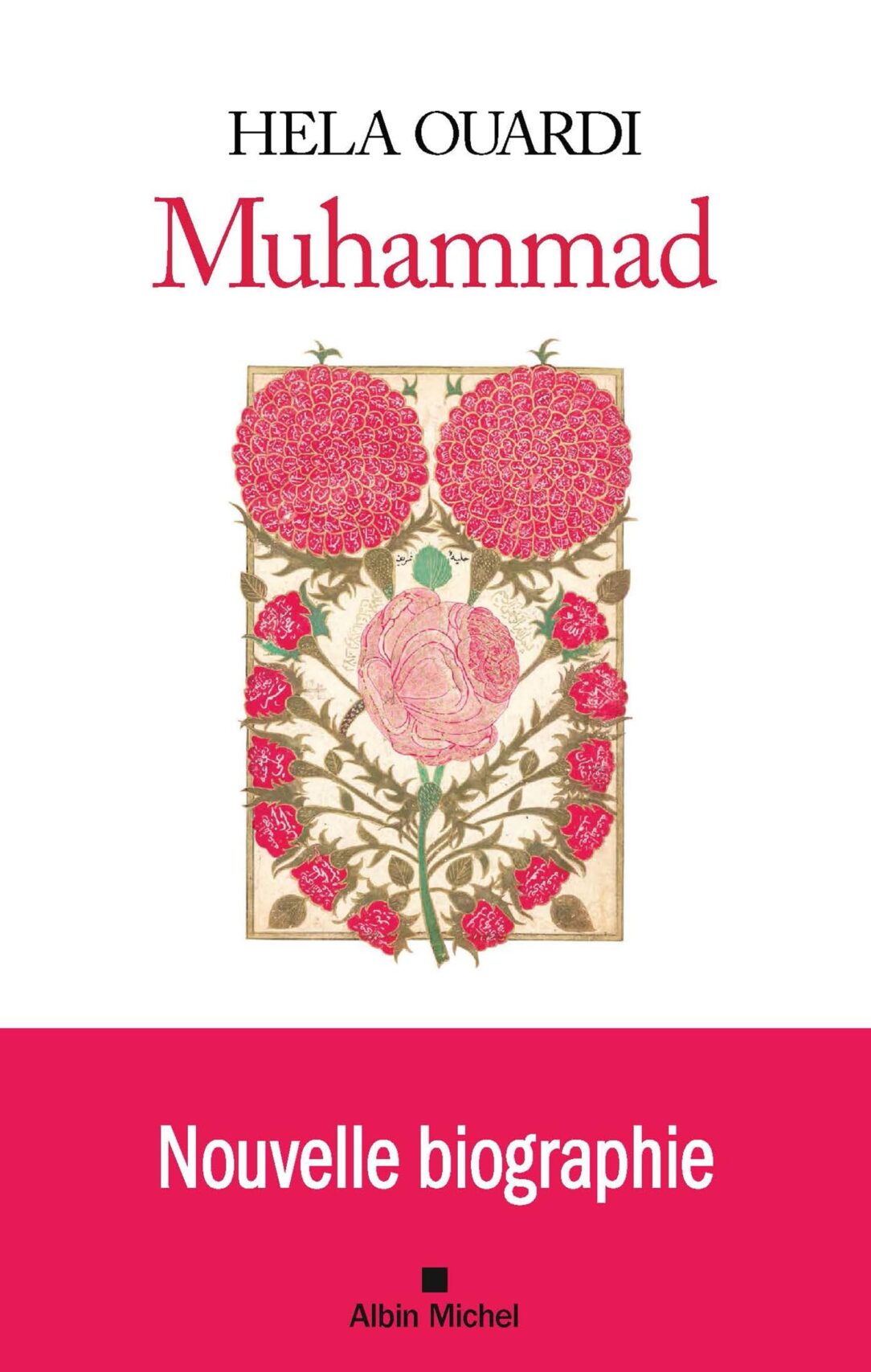
In an analytical tour de force, Ouardi excavates overlooked and conveniently forgotten passages from the Tradition to strip Muhammad of the thick halo of hagiographies and the fog of perennial apologetics. The man who emerges from Muhammad. Nouvelle Biographie is a creature of his time, shaped by the tribal ethos of the Hijaz in what is now Saudi Arabia. He was an active (if not zealous) participant in a culture whose values, when seen unfiltered, may appear shocking to us today. Yet the artful work of early Muslim chroniclers has veiled the material history of the Prophet and left Muslims with liturgical sounds and echoes that evoke saints and angels, not abandoned children, feelings of inadequacy, a seemingly endless appetite for marriages, inhumane cruelty, and other flaws that are far too human for us to bear.
The ultimate takeaway from Ouardi’s book is that the religion of Islam, with its Qur’an and Tradition, is an expression and extension of Muhammad’s turbulent life. The rightly guided caliphs who follow Muhammad as heads of the Islamic community—Abu Bakr, Umar, Uthman, and Ali—are either Muhammad’s fathers-in-law or his sons-in-law. The first Umayyad and Abbasid dynasties claimed Muhammad’s tribal or family ties. Such a passionate attachment to Muhammad implies that the Prophet was the best human being ever created, chosen by God to give us His last message before He vanishes into eternal silence. Yet Ouardi’s painstakingly meticulous work of reconstruction banishes this myth to introduce a man who is far more complex than the image we have of him.
As in the tale of Abraham and his son Ishmael or Isaac, the story begins with Abd al-Muttalib sparing the life of his tenth son Abd Allah after God and members of his Qurayshi tribe allowed him to sacrifice many camels instead. Father and son are now on their way to marry two cousins, Hela and Amina. Before Abd Allah arrives at Amina’s house, he is accosted by a woman who offers him 100 camels in exchange for sexual relations. He refuses and walks with his father into Amina’s house, consummates his “marital” desire with her, and leaves without ever setting foot in that house again. (He goes back to have sex with the strange woman, but it’s too late.) Amina gets pregnant and hears a voice telling her that her baby, whom she should name Ahmad, is destined to be the lord of his nation. An intense light that reaches Syria emanates from her during delivery in 570, the same year when Allah sends mysterious birds to stop the destruction of the Ka’ba by throwing stones at Abraha, a Christian invader on an elephant. One would think that, given this experience, Amina would cherish her newborn and protect him with her life. Instead, she hands him over to a wet nurse named Halima and doesn’t see her child again until he is five.
With no biological parents, Muhammad is now practically an abandoned orphan, deprecatingly called by some as “the son of Abu Kabsha,” after the name of Halima’s husband. Abd al-Muttalib entrusts Muhammad to Amina when the boy is five, but she dies on her way to retrieve him and, like Abd Allah, is buried far from Mecca. Before dying, Abd al-Muttalib asks his son Abu Talib to adopt the boy. Muhammad joins a family of five children (Ali is not yet born). During a business trip with his uncle, a monk in Busra named Bahira notices a birthmark between Muhammad’s shoulders and identifies him as the anticipated prophet.
By the age of fifteen, Muhammad participates in a battle not as a combatant, but by handing arrows to his uncle Zubayr. Tradition reports that during this time, he fell in love with his cousin Umm Hani (the daughter of Abu Talib), but his first marriage was to Khadija, whose brother is married to the sister of Abu Talib. The prosperous lady who was married twice and is the mother of five children (including one named Abd Allah) relieves Muhammad of the burden of making a living and gives him the stable family life he has always craved. The couple engenders four daughters and an unknown number of boys who die after birth, a fact that makes it nearly impossible to believe that Khadija is forty when she marries Muhammad. In any case, Muhammad is happy to add his adopted son Zayd al-Haritha and his young cousin Ali (son of Abu Talib) to his household. Muhammad’s first daughter, Zaynab, eventually marries Khadija’s nephew Abu l-`Ass ibn Rabi, the son of her sister Hela. Muhammad’s powerful and wealthy uncle, Abu Lahab, asks for Ruqayya and Umm Kalthum for his own sons. The last girl, Fatima, would be reserved exclusively for Ali; that would be a marriage by prophetic decree.
Like many members of his tribe, Muhammed retreats to the Cave of Hira to meditate, even as the unfolding Byzantine-Sassanid (Persian) wars in the broader region are fueling a sense of the apocalypse that led to the emergence of several self-declared prophets like Maslama, who worships a god called al-Rahman, one of the attributes of Allah in the Qur’an. Khadija’s Christian cousin Waraqa (who never converts to Islam), tells Muhammad that he is the awaited prophet. But the Qurayshis mock Muhammad when he appears with his claims, making us wonder why a man nicknamed “the trustworthy” (ameen) would be ridiculed. Muhammad’s uncle, Abu Lahab, is so dismissive of his nephew that the Qur’an damns him by name. In response, Abu Lahab orders his sons to divorce Muhammad’s daughters Ruqayya and Um Kulthum, which leads Uthman, the son of Muhammad’s cousin Arwa, already married to two wives and father to seven children, to ask for Ruqayya in marriage. Meanwhile, Muhammad’s son, Zayd, divorces the daughter of Abu Lahab, Durra.
Muhammad’s uncle and father figure Abu Talib dies at almost eighty, soon to be followed by Muhammad’s wife, Khadija, at age sixty-five. At this point, and strangely enough, Abu Lahab offers Muhammad his protection. Muhammad then embarks on a marriage spree, beginning with the six-year-old daughter of his best friend Abu Bakr (to be consummated three years later) and Sawda bint Zum`a (the niece of Muhammad’s maternal great-grandmother), a few days after the death of Khadija. With the pagans of Mecca siding with the Persians in the Byzantine-Sassanid wars, Muhammad decides it’s time to leave Mecca. He heads to Ta’if, but returns to Mecca ten days later. Since his maternal uncles are from Yathrib, an agglomeration of three Jewish tribes (Quraydha, Nadhir, and Qaynuqa) and two Arab ones (Aws and Khazraj of Yemeni origin), he chooses that destination. He leaves with Abu Bakr, settles in Quba’, a suburb of Yathrib, for ten days, during which he is visited by other Emigrants (Muhajirun) from Mecca who precede him to Yathrib, before he finally makes his own entrance accompanied by armed guards from the tribe of Banu Najjar. At the age of fifty-two, Muhammad builds a house (the first one he ever owns) with chambers for his wives and daughters surrounding a courtyard. The house would double as the first mosque of Islam.
It is well known that Muhammad’s migration to Yathrib is a turning point in his life and the history of Islam. He becomes a political leader trying to unite his followers from Mecca (Muhajirun) and protectors in Yathrib (Ansars) into a single army to fight foreign enemies. He forbids vendettas and replaces them with tribute payments. He seeks a rapprochement with the Jewish tribes by prescribing fasting during Kippur (Àshura) and praying toward Jerusalem. With no practical work experience in farming or the crafts, the Muhajirun from Mecca can’t do much in Yathrib. Settled and unemployed, Muhammad and his followers resort to raiding Qurayshi caravans (as in the epic battle of Badr) and other tribes for spoils, with Muhammad keeping one fifth of the bounty. One of the many prisoners taken by Muhammad’s troops during Badr was Abu l-`Ass. His wife Zaynab (Muhammad’s daughter) tries to ransom him by offering, among other things, the necklace her mother Khadija gifted her at her wedding. Touched, Muhammad pardons his son-in-law, and soon Zaynab joins her father in Yathrib.
Muhammad adds Umar’s daughter Hafsa and Zaynab bint Khuzayma (his uncle Abbas’s sister-in-law) as wives, is defeated and badly wounded at the battle of Uhud, and kills for the first time a certain Ubayy ibn Khalaf. After expelling the Jewish tribe of Banu Nadhir from Medina, he marries Abu Jahl’s cousin, the beautiful Umm Salama (alias Hind), and continues his wars with Quraysh, this time digging a trench (khandaq) on the advice of his Persian companion, Salman, to prevent the Qurayshis from invading Yathrib, but condemning him and his followers to a painful siege. He now turns his attention to the Jews of Banu Quraydha, who are dismissed as monkeys and pigs, before subjecting them to a massacre. One of his spoils is the beautiful Rayhanna bint Sham`un. Other Jewish tribes flee to Khaybar.
In five years, Yathrib is rebaptized Medina (madinat al-nabiyy). Muhammad falls for Zaynab bint Jahsh, the wife of his adopted son Zayd, and Allah promptly approves of the deal. Zayd reverts to his original name of ibn-Haritha, and adoption is henceforth forbidden in Islam. Muhammad lives in a boisterous harem while raids continue. The Muslims capture Thumama ibn Athal while on his way to perform `umra (minor pilgrimage) in Mecca (the `umra and hajj [major pilgrimage] were pagan, pre-Islamic rituals). While Muhammad keeps adding wives to his packed harem, Aisha is accused of adultery. But the Qur’an exonerates her and decrees four witnesses to the material act, leading one of his companions to comment sarcastically that if he finds his wife in the arms of a man, he would have to ask the man to stay put until the husband returns with four witnesses to prove his wife’s adultery. “Exactly,” replies the Prophet matter-of-factly.
In March 628 (year 6 of the Hijra), Muhammad heads to Mecca to perform `umra and sacrifices seventy heads of cattle. Only his wife Umm Salama is allowed to join him. (Aisha, following the adultery accusation, is forever banned from leaving Medina.) Before reaching Mecca, he gets into a state of “ritual purity” by, among other things, wearing the pilgrims’ habit (ihram). Camping at Hudaybiya, some fifteen kilometers away from Mecca, he asks his followers to renew their pledge of allegiance (known as the Pledge of Radhwan) to him before he signs a peace treaty with the Qurayshis of Mecca. Both parties agree not to engage in armed hostilities for ten years, and Muhammad’s `umra to be postponed to the following year.
Back in Medina, Muhammad, whose life is centered in the Hijaz in Arabia, sends letters to heads of state, including Heraclius of Byzantium, asking them to convert to Islam in order to remain safe. He sends an embassy to the Negus of Abyssinia to help him marry the Qurayshi Umm Habiba, the daughter of his sworn enemy Abu Sufyan, who is living in Abyssinia because a contingent of Muslims fled there early in Muhammad’s mission. In the meantime, Abu l-`Ass, the husband of Muhammad’s daughter Zaynab, converts to Islam and joins his wife in Medina.
Barely three weeks after the Treaty of Hudaybiya , Muhammad, accusing a Jew and his daughters of trying to poison him, launches a raid (ghazwa) on the Jews of Khaybar, located some 150 kilometers north of Medina. The Jews surrender and agree to share their harvests with Muslims, making them the first non-Muslim subjects of an Islamic state. Muhammad takes the beautiful seventeen-year-old Safiyya for himself, followed by the Egyptian Copt Maria, who promptly grows pregnant and gives birth to a boy named Ibrahim, who dies in less than two years.
The following year, he finally enters Mecca, as stipulated in the Hudaybiya treaty, to perform his `umra (known as `umra al-qadha’). Although the Qurayshis made the Ka`ba off limits, he asks his muezzin to call for prayers from its rooftop. Before leaving, he marries Maymuna bint al-Harith, who is related to his paternal aunts, and welcomes the conversion of Quraysh’s military leader, Khalid ibn al-Walid (nicknamed by the Prophet “the sword of Allah”), who follows him to Medina. Al-Walid’s defection would be, Ouardi tells us, a “decisive turning point in the history of Islam.”
Muhammad returns to Mecca as a triumphant Prophet, knocking down all the idols surrounding the Ka`ba and reconnecting with his lost homeland. He reconciles with his cousins, the sons of Abu Lahab, and tries again to marry his first love, Umm Hani, but she refuses again, claiming she is old and that her sons don’t approve. She also notices that the prophet has wrinkles in his fat belly.
In 630, Muhammad confronts the tribes of Hawazin and Thaqif at Hunayn and Awtas and walks away with more tribute and captives. A woman named al-Shayma, ransoming one prisoner, claims to be Muhammad’s milk sister because her mother is the sister of Halima, Muhammad’s wet nurse. In the meantime, Muhammad, feeling generous towards the Qurayshis in Mecca, showers them with gifts, even if they are not Muslims. They are merely those whose hearts have been softened (mu’allafa qulubuhum). The popular notion of Muhammad entering Mecca as a triumphant conqueror is an “optical illusion,” says Ouardi. It is through his marriages to the Qurayshi aristocracy (Umm Salama, Umm Habiba, and Maymuna) as well as his daughter Zaynab’s marriage to Abu l-`Ass that the orphan is reconciled to his original home (bayt).
Surprisingly, though, Muhammad doesn’t settle in Mecca, but returns to Medina, while pagan pilgrimages continue to be practiced in Mecca two years after its surrender. Forcing the Qurayshis to recognize him may have been his goal; he is no longer an abandoned orphan, but a leader of a new religious nation that includes his native tribe. He spends his last two years in Medina, performing, along with his wives and companions, one last hajj ritual in March 632. When he died on June 8, 632, in Medina, a new chapter of political infighting and violence among Muslims (Muhajirun versus Ansars, Sunnis versus Shi`a) opened and has continued to this day.
In addition to his thirteen known wives (Khadija, Sawda, `Aisha, Hafsa, Zaynab bint Khuzayma, Umm Salama, Rayhana, Juwayriyya, Zaynab bint Jahsh, Safiyya, Umm Habiba, Maria, and Maymuna), several “enigmatic” women pass through Muhammad’s harem, especially toward the end of his life. The source of the hadith saying that Muhammad had a special affection for `Aisha—the only virgin he marries—is probably Aisha herself, since he continues to fall in love with women long after he consummated his marriage with her. Jealousies and rivalries among the wives are rampant, but the Muslim wives also rally against the Jewish Safiyya.
At one point, the exasperated Prophet leaves his harem for a month, leaving his wives in a dangerous limbo, since the Qur’an forbids Muslim men to marry them. What’s particularly noticeable about Muhammad’s intimate life is how it mirrors his career as a prophet. Just as the humble Meccan preacher turns into an aggressive chieftain in Medina, his long monogamous life with Khadija gives way to a seemingly insatiable polygamous lifestyle. Ironically, the Prophet attributes his superhuman sexual appetite to an aphrodisiac dish (served directly from paradise by the angel Gabriel) that looks like minced meat stew because, otherwise, his libido, he confesses, is rather weak. He also leaves no male heir, which is why his detractors maliciously dismiss him as emasculated (abtar).
Abandoned by his biological parents, Muhammad, a man of his tribal milieu, was able to re-create his own family through marriages and promises of wealth and glory for his followers. His quest for respect from members of his clan becomes, in the hands of authors who never met the man, the foundation of a new religion. Ouardi’s biography will not change centuries of deeply rooted beliefs, but her work (based on the same sources devout Muslims use to explain their faith) will long be remembered as a turning point in our understanding of Islam.
Select (review) articles by Anouar Majid on the history of early Islam since 2013:
Jerusalem and the Emergence of Islam
Comments are moderated by the editor and may not appear on this discussion until they have been reviewed and deemed appropriate for posting. All information collected is handled in a manner consistent with our privacy policy.